DINUY expands its eMobility platform with a new BIM section and incorporates its range of electric vehicle chargers into the digital building design environment.
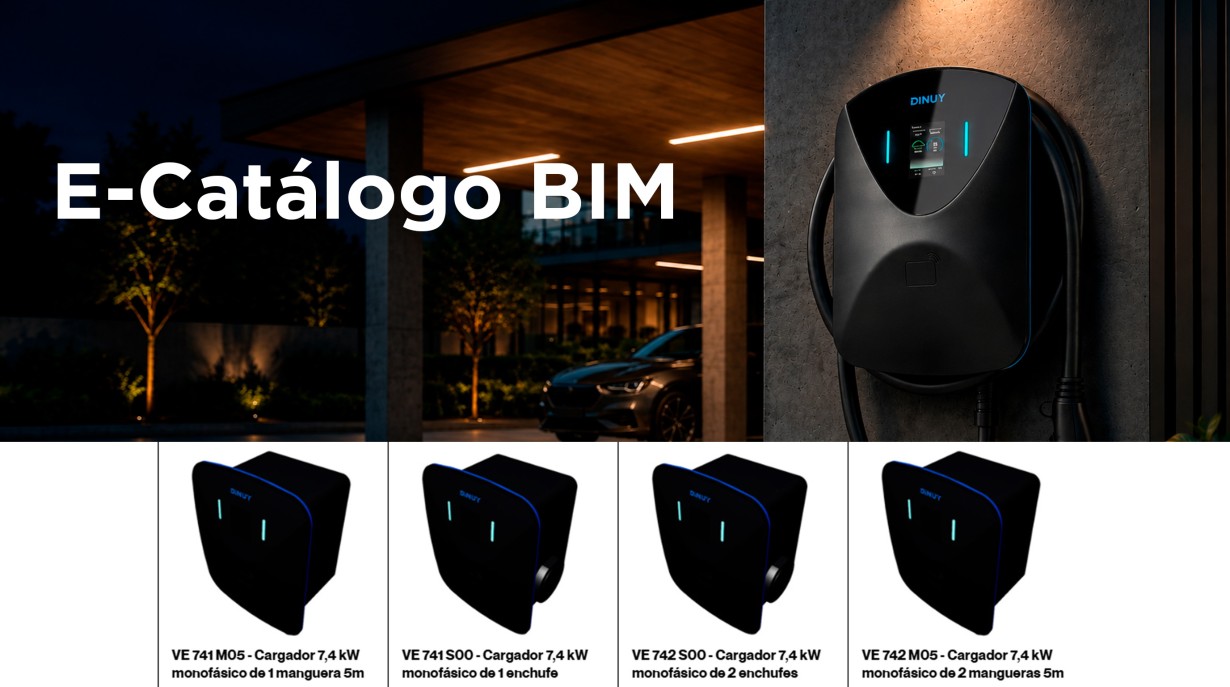
DINUY continues to advance its innovation and digital transformation strategy with the launch of a new BIM-specific section within its specialized electric mobility platform, emobility.dinuy.com. This new section makes the BIM models of its electric vehicle charger range available to the market, facilitating the integration of charging solutions into architecture, engineering and construction projects developed using the Building Information Modeling (BIM) methodology.
The incorporation of DINUY's eMobility range into the BIM ecosystem represents a strategic step towards adapting to the new building design and management methodologies that are becoming increasingly widespread in the construction and infrastructure sectors. Thanks to this initiative, architects, engineering firms, consultants, specifiers and installers can access intelligent digital models of DINUY chargers and integrate them directly into their projects from the earliest design stages.
BIM: Much More Than a 3D Model
The BIM methodology has transformed the way buildings and infrastructures are designed, constructed and managed. Unlike traditional CAD models, BIM objects incorporate technical, functional and operational product information, allowing all relevant project data to be centralized within a single digital model. The incorporation of DINUY chargers into the BIM format enables professionals to access precise information regarding dimensions, electrical characteristics, installation requirements, maintenance procedures and performance specifications for each unit, significantly improving design quality and accuracy.
Benefits for Designers, Engineering Firms and Installers
- The availability of eMobility chargers in BIM format provides significant advantages throughout the entire project lifecycle:
- Reduced design and specification times.
- Minimization of errors and early clash detection.
- Greater accuracy in installation planning and execution.
- Optimization of costs and resources during the project phase.
- Easy integration into design platforms such as Autodesk Revit and other BIM environments.
- Centralized access to up-to-date technical information provided by the manufacturer.
- Improved coordination among all stakeholders involved in the project.
In addition, the use of BIM objects facilitates the planning of future expansions, maintenance operations and asset management throughout the entire lifecycle of the installation, an increasingly important aspect in smart buildings and sustainable mobility projects.
The integration of DINUY's eMobility range into the BIM environment also responds to the growing market demand for charging solutions integrated into new construction, refurbishment and tertiary building projects. Product digitalization helps accelerate specification processes while facilitating compliance with new regulatory and sustainability requirements associated with electric mobility.
The BIM models of DINUY chargers retain all the key features that differentiate the range: manufacturing in Spain, native KNX integration, advanced connectivity, remote management through DINUY eMobility, and high robustness for residential, collective and tertiary applications.
With the launch of this new BIM section on emobility.dinuy.com, DINUY reaffirms its commitment to innovation and to supporting industry professionals throughout their digital transformation process. The company continues to develop tools that facilitate the work of architects, engineering firms, installers and energy managers, contributing to the creation of more efficient, connected and sustainable buildings. The new BIM objects for the eMobility range are now available through the new BIM support section of DINUY's specialized electric mobility platform, enabling professionals to integrate charging solutions from the earliest stages of conception and design of any project.